When it comes to making informed decisions, understanding the concept of expected value is crucial. It's a fundamental principle in statistics, economics, and decision theory that helps you evaluate the potential outcomes of a situation and make the best choice. Calculating expected value can seem daunting, but it's actually a straightforward process. In this article, we'll break down the steps to calculate expected value, making it easy for you to apply this powerful tool to your everyday life.
1. Define the Possible Outcomes
To calculate expected value, you need to start by identifying all the possible outcomes of a situation. This could be the potential returns on an investment, the likelihood of different events occurring, or the possible consequences of a decision. Make a list of all the possible outcomes, and be as comprehensive as possible. This will ensure that you're considering every possible scenario, and you can then assign a probability and value to each outcome.
2. Assign a Probability to Each Outcome
Once you have your list of possible outcomes, assign a probability to each one. This should be a decimal value between 0 and 1, where 0 represents an impossible outcome and 1 represents a certain outcome. For example, if you're flipping a coin, the probability of heads or tails is 0.5. Be as accurate as possible when assigning probabilities, as this will directly impact the accuracy of your expected value calculation.
3. Determine the Value of Each Outcome
Next, determine the value of each outcome. This could be a financial value, a utility value, or any other type of value that's relevant to your decision. For example, if you're considering investing in a stock, the value of each outcome might be the potential return on investment. Make sure you're consistent in how you assign values, and consider both positive and negative outcomes.
4. Multiply the Probability and Value of Each Outcome
Now it's time to calculate the expected value of each outcome. To do this, multiply the probability of each outcome by its corresponding value. This will give you the expected value of each individual outcome. For example, if an outcome has a probability of 0.2 and a value of $100, the expected value would be 0.2 x $100 = $20.
5. Sum the Expected Values of All Outcomes
To calculate the overall expected value, sum the expected values of all the individual outcomes. This will give you the total expected value of the situation. For example, if you have three outcomes with expected values of $20, $50, and $30, the overall expected value would be $20 + $50 + $30 = $100.
6. Consider the Time Value of Money
When calculating expected value, it's essential to consider the time value of money. This means taking into account the fact that money received today is worth more than the same amount received in the future. To do this, you can use a discount rate to reduce the value of future outcomes. This will give you a more accurate picture of the expected value, as it takes into account the time value of money.
7. Account for Risk and Uncertainty
Risk and uncertainty can significantly impact the expected value of a situation. To account for this, you can use techniques such as sensitivity analysis or scenario planning. These methods allow you to test how changes in assumptions or probabilities affect the expected value, giving you a better understanding of the potential risks and uncertainties involved.
8. Use Expected Value in Decision-Making
Finally, use the expected value calculation to inform your decision-making. By comparing the expected values of different options, you can make a more informed choice that takes into account the potential outcomes and their probabilities. Remember to consider other factors, such as risk and uncertainty, and to continue monitoring and updating your expected value calculations as new information becomes available.
9. Continuously Monitor and Update Your Calculations
Expected value calculations are not a one-time task. As new information becomes available, you should continuously monitor and update your calculations to ensure they remain accurate. This will help you stay on top of changing circumstances and make adjustments to your decisions as needed.
10. Apply Expected Value to Real-World Scenarios
By applying the concept of expected value to real-world scenarios, you can make more informed decisions and achieve better outcomes. Whether it's investing in the stock market, evaluating business opportunities, or making personal financial decisions, expected value can help you navigate complex situations and make the best choice. With practice and experience, you'll become more comfortable using expected value calculations to guide your decision-making, leading to greater success and prosperity in all areas of your life.
If you are looking for How to Calculate Expected Value Probability - Owlcation you've visit to the right web. We have 10 Pics about How to Calculate Expected Value Probability - Owlcation like 3 Ways to Calculate an Expected Value - wikiHow, 3 Ways to Calculate an Expected Value - wikiHow and also How to Calculate Expected Value Probability - Owlcation. Read more:
How To Calculate Expected Value Probability - Owlcation
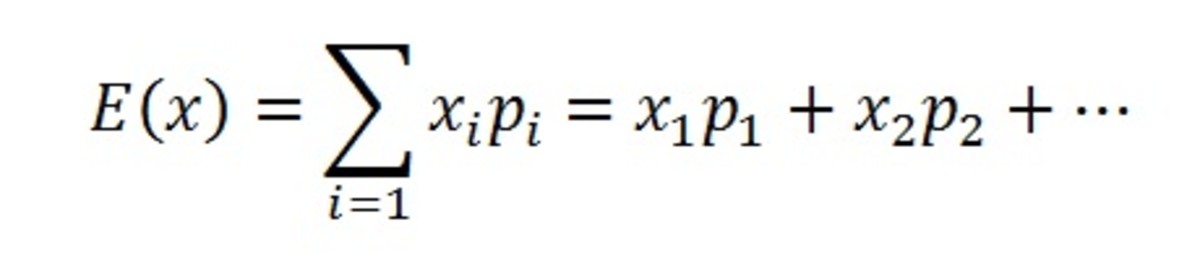 owlcation.com
How to Calculate Expected Value Probability - Owlcation
3 Ways To Calculate An Expected Value - WikiHow
 www.wikihow.com
3 Ways to Calculate an Expected Value - wikiHow
3 Ways To Calculate An Expected Value - WikiHow
 www.wikihow.com
3 Ways to Calculate an Expected Value - wikiHow
Probability - How To Calculate Expected Value From The Distribution
 math.stackexchange.com
probability - How to calculate expected value from the distribution ...
3 Ways To Calculate An Expected Value - WikiHow
 www.wikihow.com
3 Ways to Calculate an Expected Value - wikiHow
3 Ways To Calculate An Expected Value - WikiHow
 www.wikihow.com
3 Ways to Calculate an Expected Value - wikiHow
3 Ways To Calculate An Expected Value - WikiHow
 www.wikihow.com
3 Ways to Calculate an Expected Value - wikiHow
How To Calculate Expected Value In Excel
 www.statology.org
How to Calculate Expected Value in Excel
How To Calculate Expected Value Probability - Owlcation
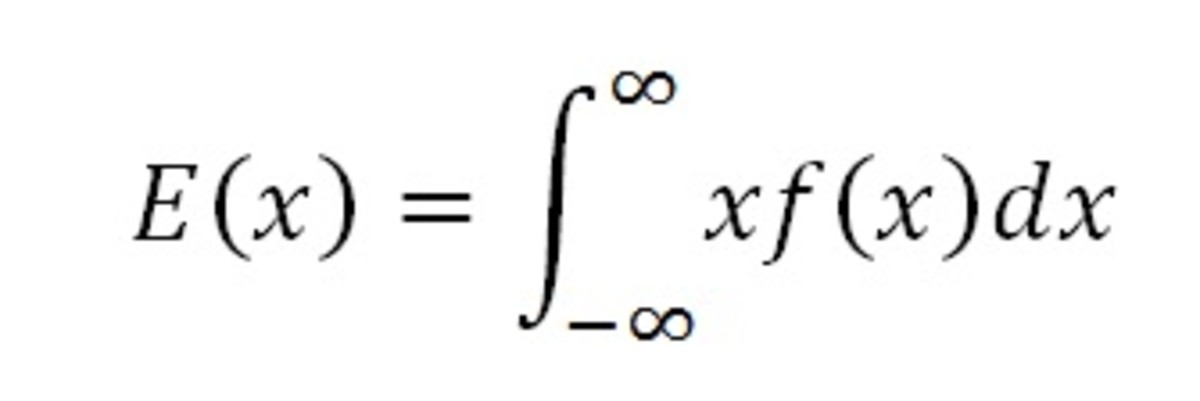 owlcation.com
How to Calculate Expected Value Probability - Owlcation
3 Ways To Calculate An Expected Value - WikiHow
 www.wikihow.com
3 Ways to Calculate an Expected Value - wikiHow
How to calculate expected value probability. 3 ways to calculate an expected value. 3 ways to calculate an expected value

