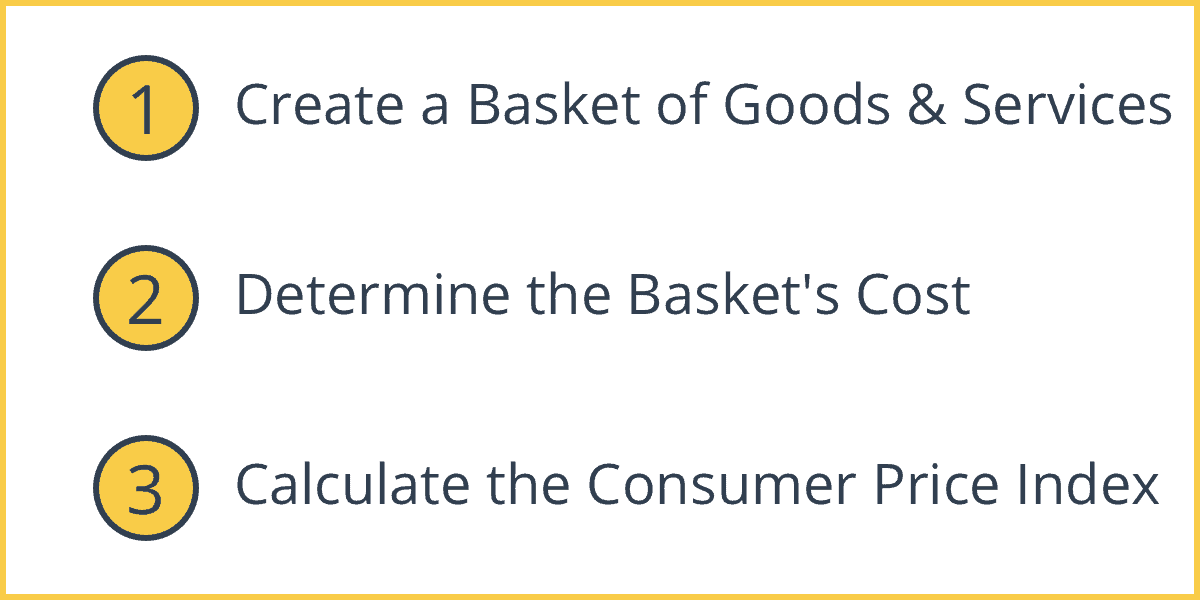
The Consumer Price Index (CPI) is a crucial economic indicator that measures the average change in prices of a basket of goods and services consumed by households. Calculating CPI involves several steps, and understanding these steps is essential to grasp the concept of inflation and its impact on the economy. Here's a breakdown of how CPI is calculated:
1. Selection of the Basket of Goods and Services
The first step in calculating CPI is to select a representative basket of goods and services that are commonly consumed by households. This basket includes items such as food, housing, clothing, transportation, and healthcare. The selection of the basket is typically based on surveys and data collection from various sources, including household expenditure surveys and retail price surveys.
2. Identification of Price Collection Outlets
Once the basket of goods and services is selected, the next step is to identify the outlets where prices will be collected. These outlets can include retail stores, supermarkets, restaurants, and other establishments where households purchase goods and services. The selection of outlets is critical to ensure that the prices collected are representative of the prices faced by households.
3. Price Collection Methods
Prices are collected using various methods, including in-person visits to outlets, telephone calls, and online surveys. The frequency of price collection varies, but it is typically done on a monthly or quarterly basis. The prices collected are then recorded and used to calculate the CPI.
4. Weighting of Items in the Basket
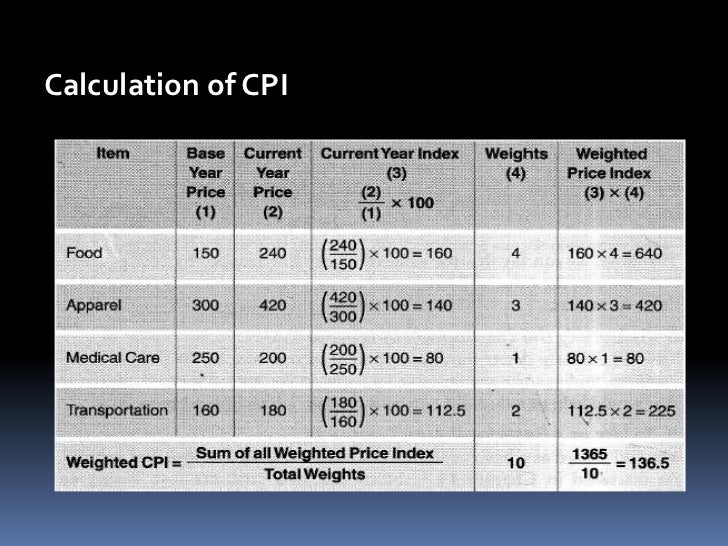
Not all items in the basket are given equal weight. The weighting of items is based on their relative importance in the household budget. For example, housing and food are typically given more weight than entertainment and recreation. The weights are usually based on household expenditure surveys and are updated periodically to reflect changes in consumer spending patterns.
5. Calculation of Price Relatives
Price relatives are calculated by dividing the current price of an item by its base-period price. The base period is a reference period, usually a year, against which the current prices are compared. The price relative is then used to calculate the percentage change in price over the period.
6. Aggregation of Price Relatives
The price relatives are aggregated using a formula to calculate the overall CPI. The formula typically used is the Laspeyres index, which is a weighted average of the price relatives. The Laspeyres index is widely used due to its simplicity and ease of calculation.
7. Adjustment for Quality Changes
When calculating CPI, it's essential to adjust for quality changes in the items in the basket. Quality changes can affect the price of an item, and if not accounted for, can lead to biased estimates of inflation. For example, if a new model of a product is introduced with improved features, the price increase may not be entirely due to inflation.
8. Seasonal Adjustment
Seasonal adjustment is another critical step in calculating CPI. Seasonal fluctuations in prices, such as increases in food prices during holidays, can distort the CPI if not adjusted for. Seasonal adjustment involves removing these fluctuations to obtain a more accurate estimate of the underlying inflation trend.
9. Revision of CPI Estimates
CPI estimates are revised periodically to reflect new data and improved methodologies. Revisions can be made to the basket of goods and services, weights, and price collection methods. The revisions ensure that the CPI remains a accurate and reliable measure of inflation.
10. Dissemination of CPI Data
Finally, the calculated CPI is disseminated to the public through various channels, including news releases, websites, and statistical publications. The data is used by policymakers, businesses, and households to make informed decisions about economic policy, investment, and consumption.
If you are looking for CPI Measurement. you've visit to the right place. We have 10 Images about CPI Measurement. like How to Calculate CPI: 12 Steps (with Pictures) - wikiHow, How to Calculate CPI: 12 Steps (with Pictures) - wikiHow and also Consumer Price Index (CPI) Explained - Intelligent Economist. Here you go:
CPI Measurement.
 www.slideshare.net
CPI Measurement.
Consumer Price Index (CPI) Explained - Intelligent Economist
 www.intelligenteconomist.com
Consumer Price Index (CPI) Explained - Intelligent Economist
What Is CPI? How To Calculate CPI
 fastloans.ph
What is CPI? How to calculate CPI
Consumer Price Index (CPI) Explained - Intelligent Economist
 www.intelligenteconomist.com
Consumer Price Index (CPI) Explained - Intelligent Economist
How To Calculate CPI: 12 Steps (with Pictures) - WikiHow
 www.wikihow.com
How to Calculate CPI: 12 Steps (with Pictures) - wikiHow
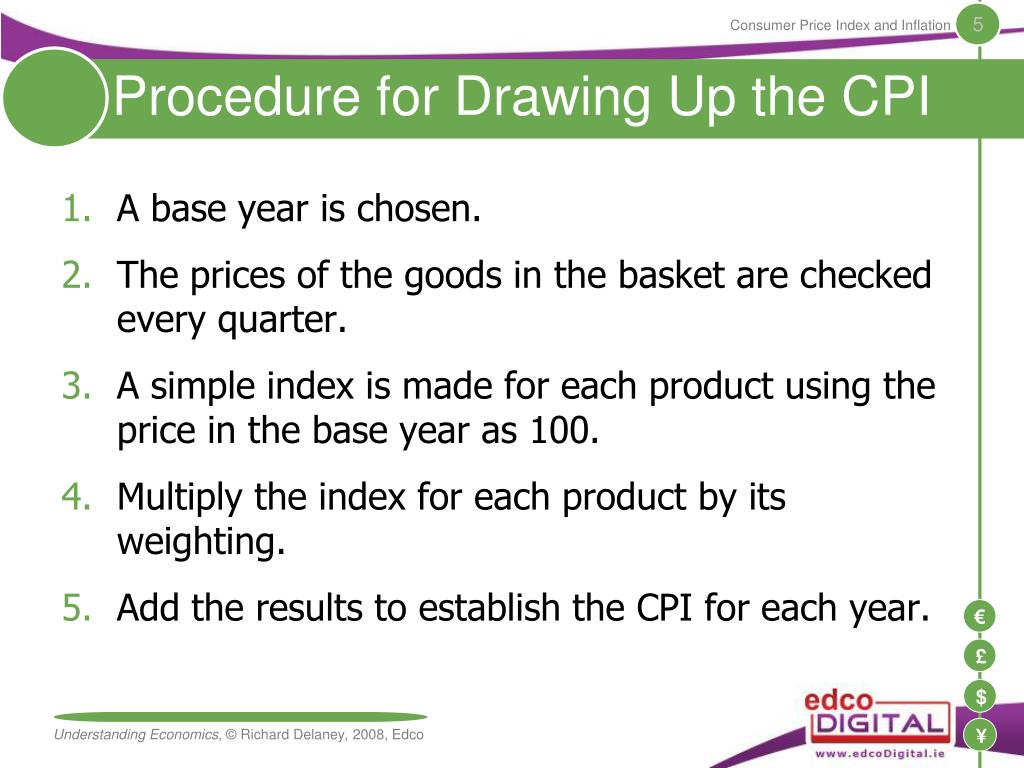
PPT - CPI And Inflation PowerPoint Presentation, Free Download - ID:4010366
 www.slideserve.com
PPT - CPI and Inflation PowerPoint Presentation, free download - ID:4010366
How To Calculate CPI (Consumer Price Index): A Simple Guide
 www.wikihow.com
How to Calculate CPI (Consumer Price Index): A Simple Guide
How To Calculate CPI: 12 Steps (with Pictures) - WikiHow
 www.wikihow.com
How to Calculate CPI: 12 Steps (with Pictures) - wikiHow
Consumer Price Index (CPI)
 quicktaxus.com
Consumer Price Index (CPI)
How To Calculate CPI (Consumer Price Index): A Simple Guide
 www.wikihow.com
How to Calculate CPI (Consumer Price Index): A Simple Guide
Consumer price index (cpi) explained. cpi measurement.. What is cpi? how to calculate cpi

